MedMindsMedical & Health Research Group
Shaping the future of global health.
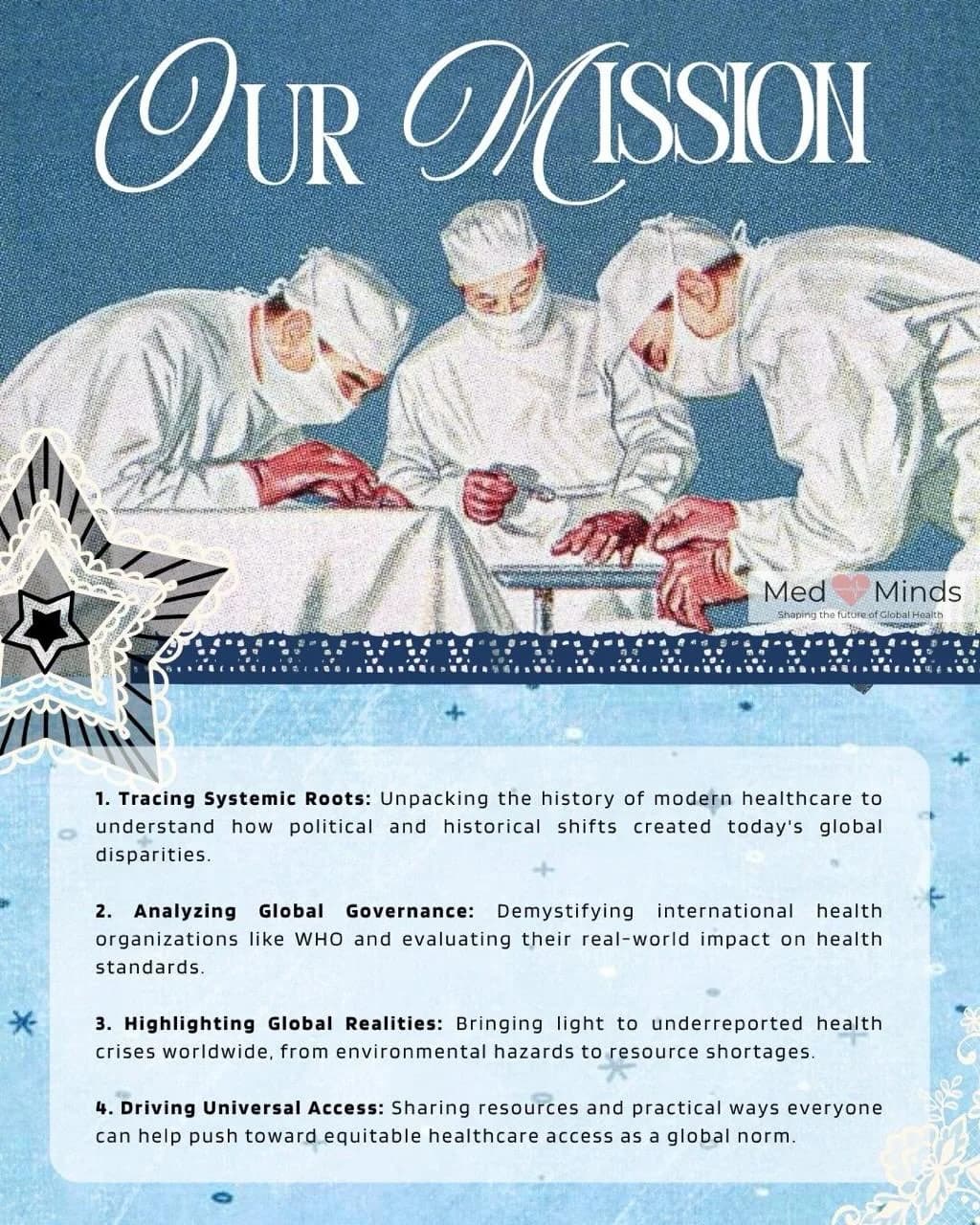
A youth-led, international research group tracing how today's health disparities were made, who governs them, which crises go unreported, and what anyone can do about access.
Cover of the relaunch post, 20 August 2026.
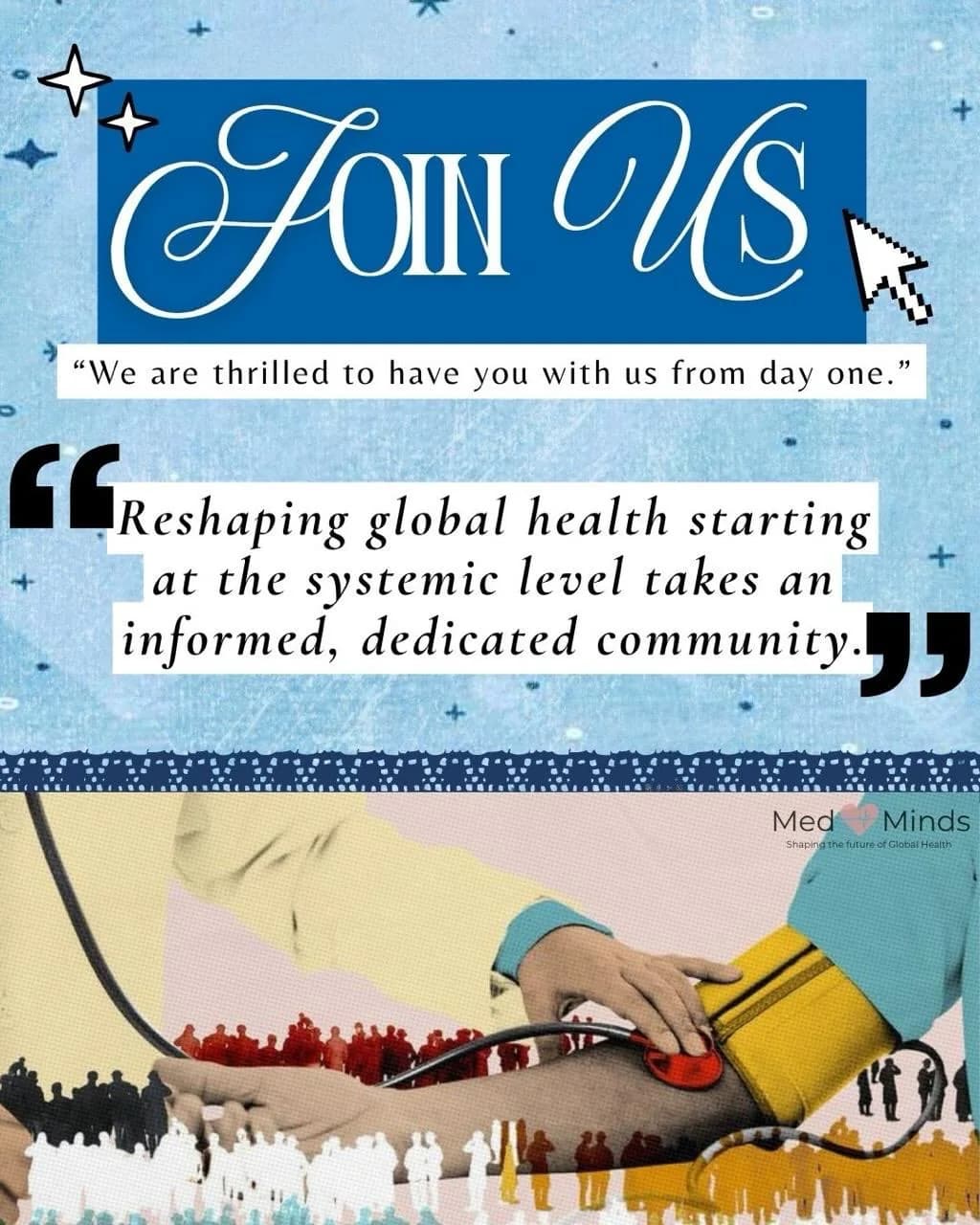
“Reshaping global health starting at the systemic level takes an informed, dedicated community.”
01Published series
Everything MedMinds has published, in order.
Carousels published on Instagram, kept here in full. Hover a row to see its cover; open it to read every slide.
02Our questions
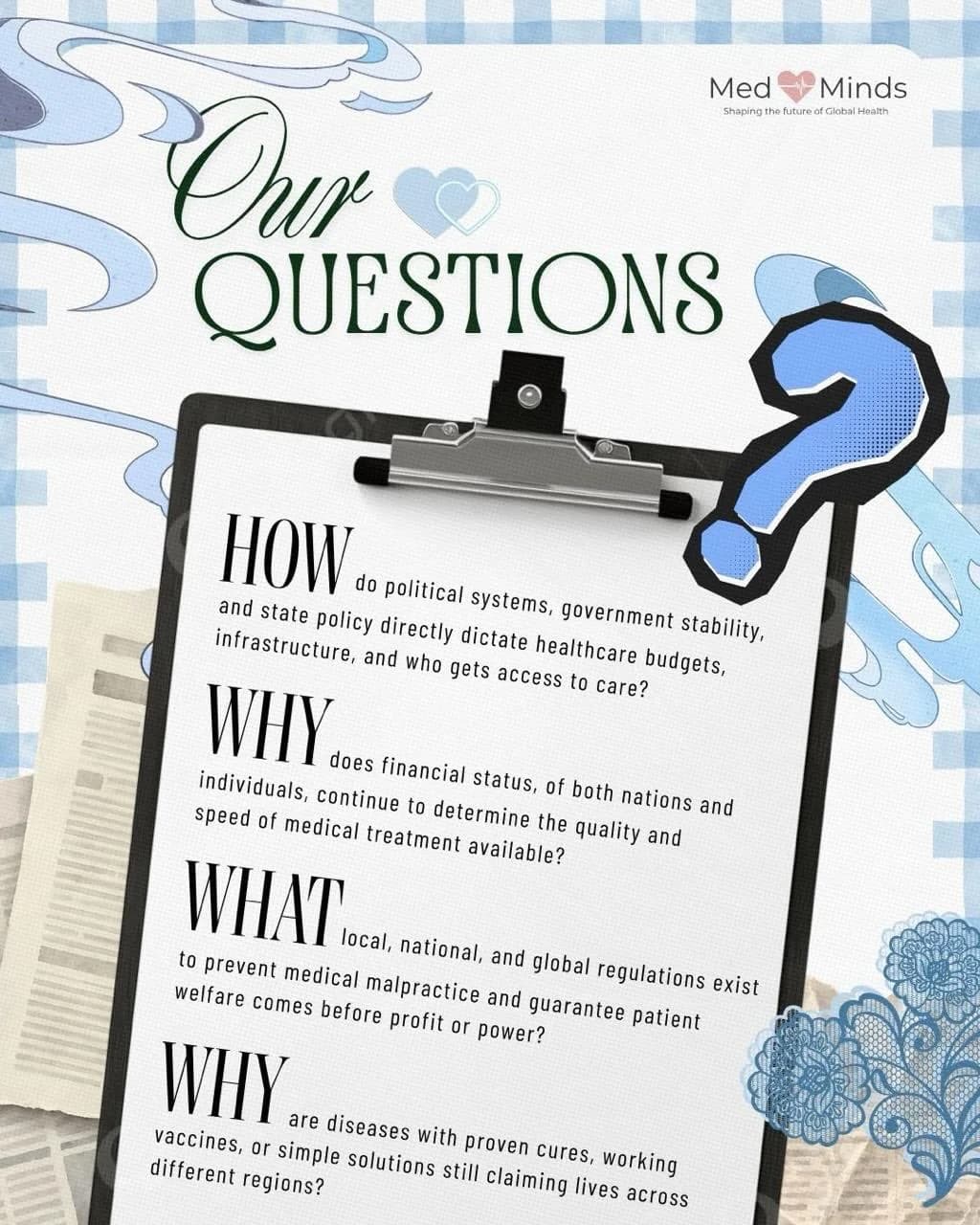
How
do political systems, government stability, and state policy directly dictate healthcare budgets, infrastructure, and who gets access to care?
Why
does financial status, of both nations and individuals, continue to determine the quality and speed of medical treatment available?
What
local, national, and global regulations exist to prevent medical malpractice and guarantee patient welfare comes before profit or power?
Why
are diseases with proven cures, working vaccines, or simple solutions still claiming lives across different regions?
03What to expect
What the group says it will publish.
- 01
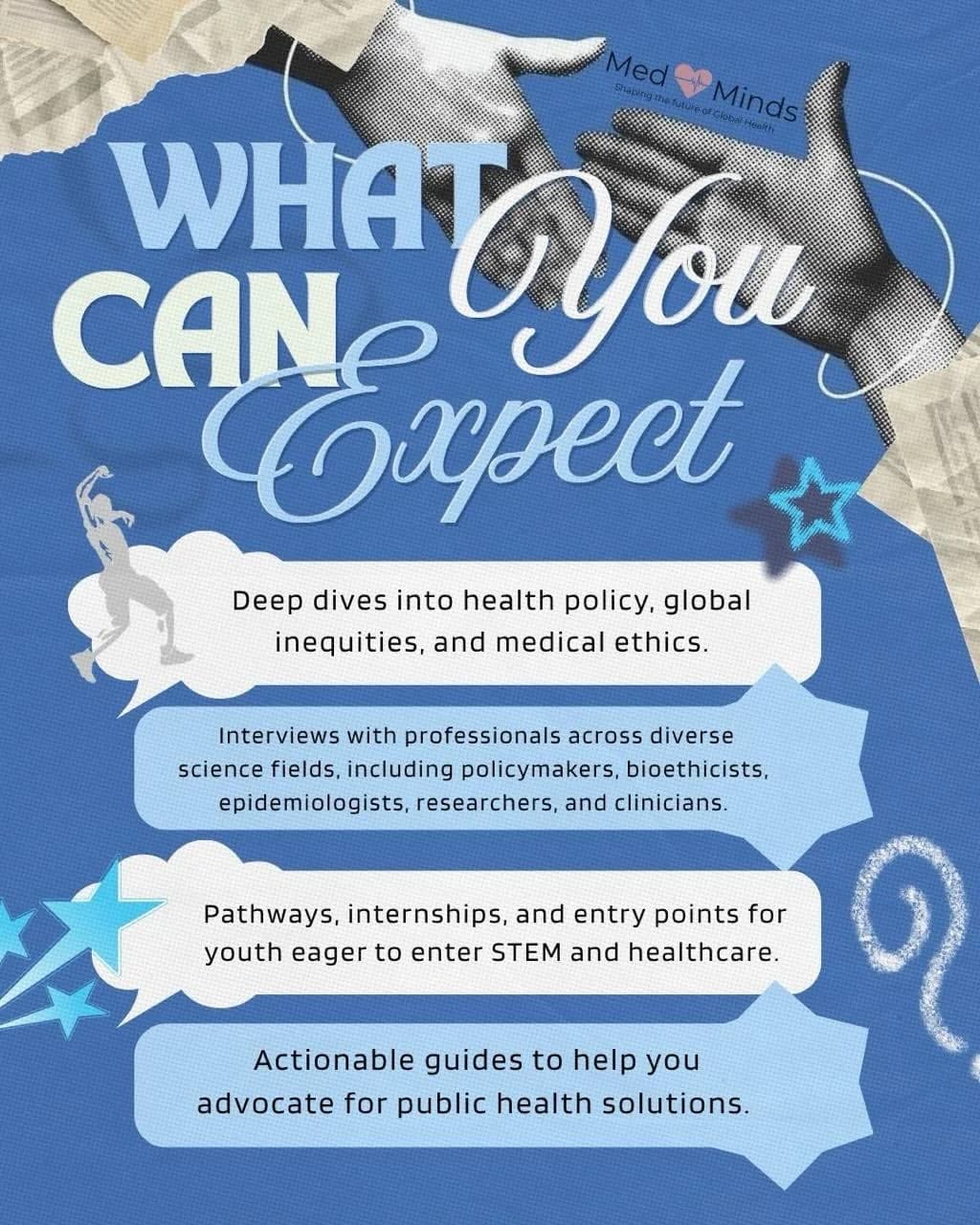
Deep dives into health policy, global inequities, and medical ethics.
- 02
Interviews with professionals across diverse science fields, including policymakers, bioethicists, epidemiologists, researchers, and clinicians.
- 03
Pathways, internships, and entry points for youth eager to enter STEM and healthcare.
- 04
Actionable guides to help you advocate for public health solutions.
As announced on 20 August 2026.
04Archive
5 slides, one wall.
05Where to give
Crises we are watching, and who is responding.
Flash floods
Nepal
Flash floods tore through northern Nepal on 26 August 2026, destroying homes, roads and bridges and leaving whole communities cut off. The IFRC launched a CHF 25 million emergency appeal the following day.
Conflict, famine and cholera
Sudan
Three years of war have collapsed essential services across Sudan. UNICEF puts the number needing humanitarian assistance at 33.7 million people, including 17.3 million children, with cholera spreading on top of mass displacement and hunger.
Hunger and malnutrition
Afghanistan
The World Food Programme reports that 17.4 million people need urgent food assistance, and that 4.9 million women and children are expected to require treatment for malnutrition in 2026. Twelve provinces are at critical levels of acute child malnutrition, the highest number recorded.
06Join
“Reshaping global health starting at the systemic level takes an informed, dedicated community.”
MedMinds recruits high-school and college students internationally through one application form.